
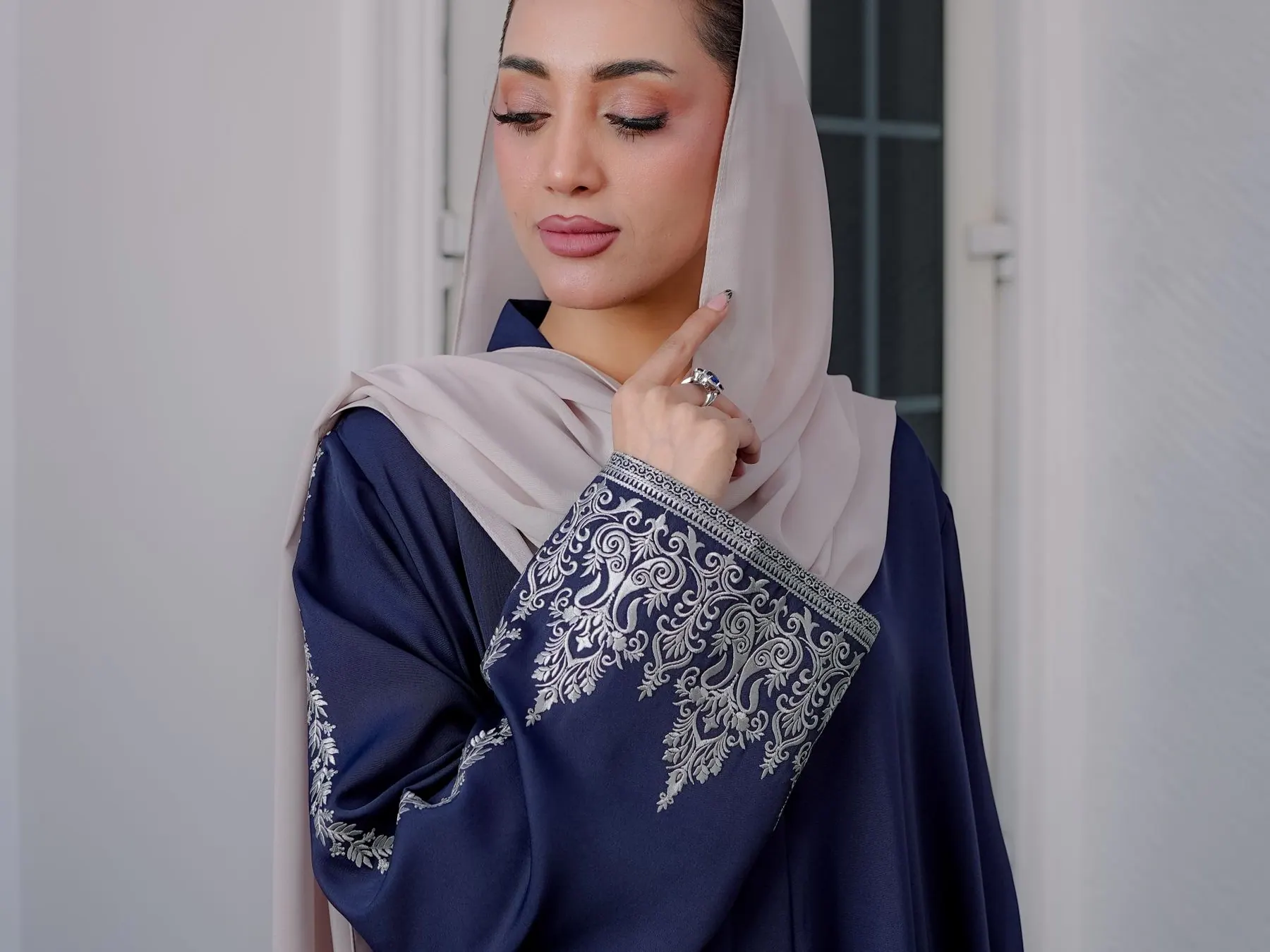
Move beyond a single neutral
Black and white have strong roles in Saudi wardrobes, but practical dressing also includes stone, sand, navy, olive, brown and muted colour. A useful palette is not defined by the largest number of colours. It is defined by how easily garments work together across the wearer’s real schedule.
Build around two anchors
Select two reliable neutrals for the main garments, then one or two accents for scarves, shirts, shoes or fine details. This keeps coordination simple while allowing seasonal change. An anchor can be dark or light; consistency matters more than a prescribed formula.
Compare undertones in daylight
Two beiges may clash because one leans pink and another yellow. Place fabrics side by side near indirect daylight. If one suddenly appears grey or orange, the undertones differ. The combination may still work, but the contrast should look deliberate.
Let texture carry quiet outfits
A nearly monochrome outfit can gain depth through matte crepe, dry linen, fine ribbing or subtle embroidery. Texture is especially useful where strong colour contrast would feel too busy. Keep shiny and highly textured areas concentrated rather than distributing them everywhere.
Account for occasion and light
Evening light can deepen dark colours and amplify reflective thread. Bright sun can wash out pale shades and reveal transparency. Photographing an outfit in the likely light is a quick way to assess the total effect, but check the actual garment too because cameras alter colour.
A compact palette exercise
- Lay out the five garments worn most often.
- Identify repeated neutrals.
- Add one accent already present in a detail.
- Remove a proposed purchase if it connects to only one outfit.
- Revisit the palette when the schedule or season changes.
Map connections, not just colours
Create a simple wardrobe map with garments as points and draw a line whenever two pieces can be worn together. A useful addition creates several new lines. An isolated colour may still be worthwhile for a specific event, but the map makes that narrow role visible before the decision.
| Role | Suggested count | Connection test |
|---|---|---|
| Anchor neutrals | Two | Each works with most high-frequency pieces |
| Supporting colour | One or two | Repeats across at least two categories |
| Event accent | As needed | Has a defined setting and complete pairing |
Keep a daylight colour record
Phone cameras, shop lighting and screens alter colour. For a reliable record, photograph garments together in the same indirect daylight with exposure locked if the device allows. Add a written note: warm, cool or difficult to judge; matte or reflective; opaque or changed by layering.
The record is not a personal-colour diagnosis. Its job is to prevent two remembered “navy” or “sand” pieces from being treated as identical when their undertone, sheen or transparency produces a different combination.
Audit one real week of combinations
List the settings that actually occurred during one week, then record the colour combination worn to each. Mark combinations that were repeated willingly, combinations chosen only because another garment was unavailable and items that required an extra purchase to work. This distinguishes a functioning palette from an attractive arrangement made only for a wardrobe photograph.
Next, select one underused garment and test it with the two anchor neutrals under the same lighting. If it fails because of fit, climate or care—not colour—do not try to solve the wrong problem by buying a coordinating accessory. If colour is the issue, first test a small connecting element already owned, such as a scarf, shirt or shoe.
Repeat the audit after a meaningful schedule or seasonal change, not every time a new trend appears. The purpose is to reduce uncertain combinations and make existing pieces easier to use, not to impose a permanent personal palette.