
Start with function, not a fixed image
The abaya is a long outer garment, but that simple definition covers a wide range of cuts and uses. In Saudi Arabia, an everyday open-front layer, a formal embroidered piece and a travel-friendly closed design solve different clothing needs. Looking at the garment through function avoids treating one style as representative of every wearer or region.
Personal practice varies. Clothing choices may reflect family preference, workplace guidance, the event, the city, climate and the wearer’s own sense of style. A useful wardrobe starts with the situations that actually recur.
Read the silhouette
Straight cuts fall close to the body without shaping it. A-line cuts add movement toward the hem. Bisht-inspired shapes use generous side volume and often place emphasis at the shoulder or sleeve. Butterfly cuts create a broad continuous drape. None is inherently more formal; fabric, finish and styling determine the final impression.
- Check shoulder placement when carrying a bag.
- Walk and sit before judging hem length.
- For open styles, test the garment with the layers intended underneath.
Match fabric to climate and schedule
Lightweight crepe is widely used because it drapes without requiring heavy structure. Nida-like fabrics feel smooth and fluid, while linen blends can introduce breathability and visible texture. Chiffon is usually used as a layer or detail rather than the main body. Dense synthetics may hold a crisp line but can feel warm during long outdoor transitions.
Hold fabric toward a light source to assess opacity, then crease a corner in your hand. This quick check reveals how easily it wrinkles and whether it springs back.
Details change the register
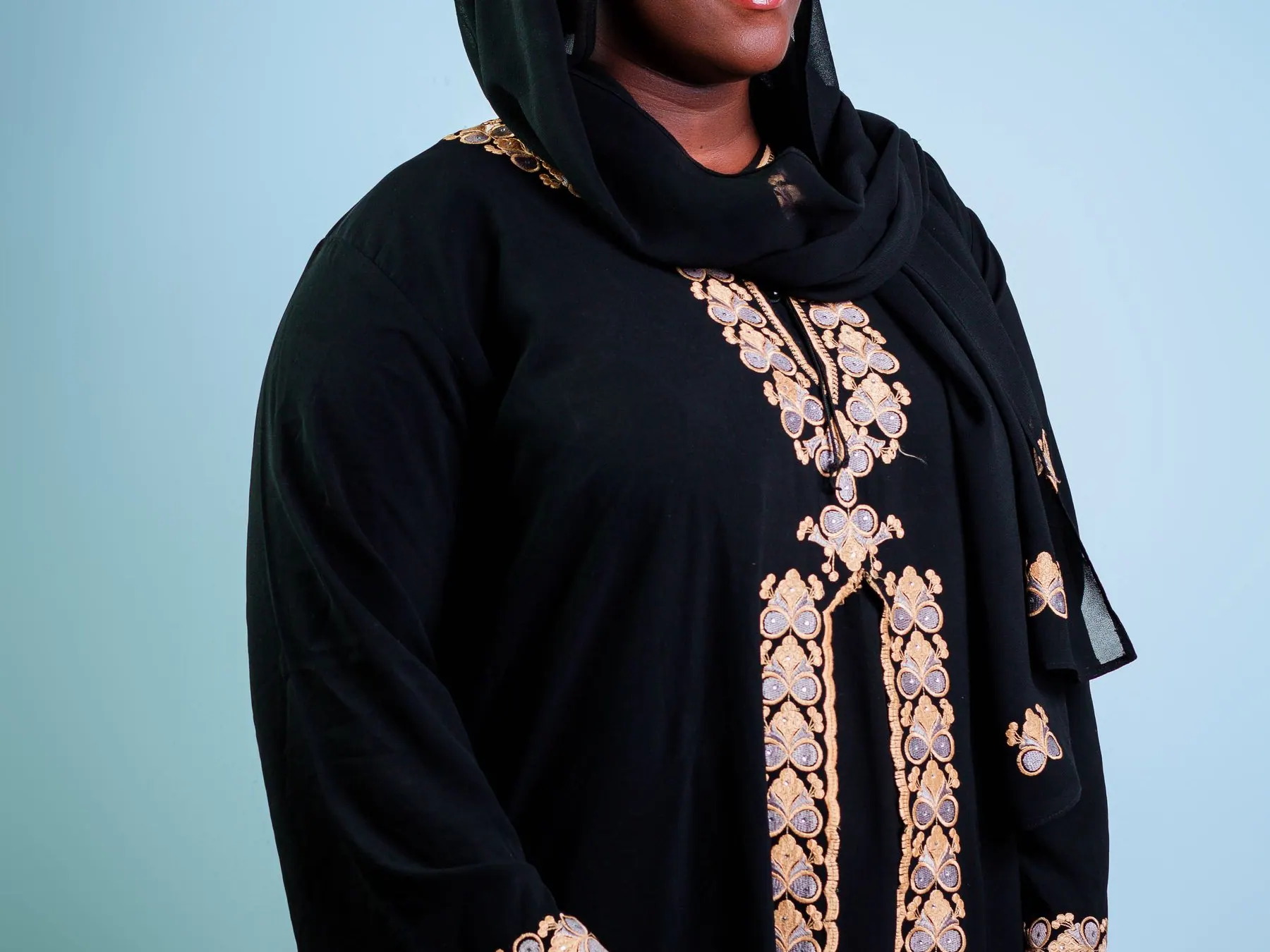
Contrast piping, embroidery, beadwork and unusual cuffs attract attention. For a flexible daily piece, quiet finishing is easier to repeat. For an event, detail can be concentrated around the sleeve edge, neckline or front opening. Examine the reverse of embellishment: rough backing and exposed threads can catch on clothing beneath.
A five-point fitting check
- The neckline lies flat when the garment is open and closed.
- Sleeves allow comfortable arm movement without pulling the body upward.
- The hem clears the ground in the shoes most often worn.
- Fasteners do not create strain lines across the front.
- Pockets sit where they can be used without distorting the drape.
Alterations to length and sleeve finish are usually easier than correcting a poorly placed shoulder or an unbalanced front.
Care for the finish you chose
Follow the garment label first. Airing after wear can reduce unnecessary washing. Close hooks before cleaning, place embellished pieces in a protective bag and avoid pressing directly on beads or metallic thread. A wide hanger supports the shoulder better than a thin wire hanger. For more detail, use our garment care guide.
The app-nazeel abaya decision matrix
This matrix turns broad style labels into observable checks. Score each candidate from 1 (poor fit for the need) to 3 (strong fit), then total the four columns. The result is not a universal ranking; it exposes which trade-off is driving the choice.
| Use case | Movement | Opacity | Thermal comfort | Care effort |
|---|---|---|---|---|
| Daily errands | Test steps, car entry and bag use | Check in daylight | Prioritise airflow | Prefer repeatable cleaning |
| Long indoor day | Test seated comfort | Check over intended layers | Allow for strong cooling | Limit fragile trim |
| Celebration | Test sleeve clearance | Inspect lining and flashes | Map arrival to venue | Plan specialist care if needed |
Record fit instead of relying on memory
For a garment that works well, record six measurements: shoulder width, sleeve length, garment length, half-chest, cuff opening and hem sweep. Note whether each measurement was taken flat or on the body. Add the shoes used during the fitting and one sentence about movement. This creates a personal reference without claiming that one size system transfers between makers.
When comparing another abaya, change one variable at a time. A two-centimetre sleeve difference may be useful; a different shoulder construction can make the same number behave differently. Measurements support a fitting, but they do not replace it.
A seven-day wardrobe observation
Before adding another abaya, record seven days of actual use. For each day, note the setting, time spent outdoors, longest seated period, bag carried, footwear and whether the garment needed cleaning. Add one friction point in plain language: “cuff entered the sink area,” “pocket pulled when the phone was inside” or “front opening moved in wind.” Specific observations are more actionable than a general feeling that a piece is inconvenient.
At the end of the week, group the friction points by construction, material or styling. A construction issue may call for alteration; a material issue may change the next fabric choice; a styling issue may be solved with a different layer or accessory. If no repeated gap appears, another garment may add variety without adding practical coverage.
This exercise describes the wearer’s own routine only. It should not be turned into a claim about what Saudi women generally wear or need. Regional practice, personal preference and setting remain distinct.